|
< Previous family introduction |
|
|||||
|
|
Family Solecurtidae Solecurtids
|
|||||
|
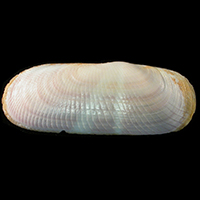
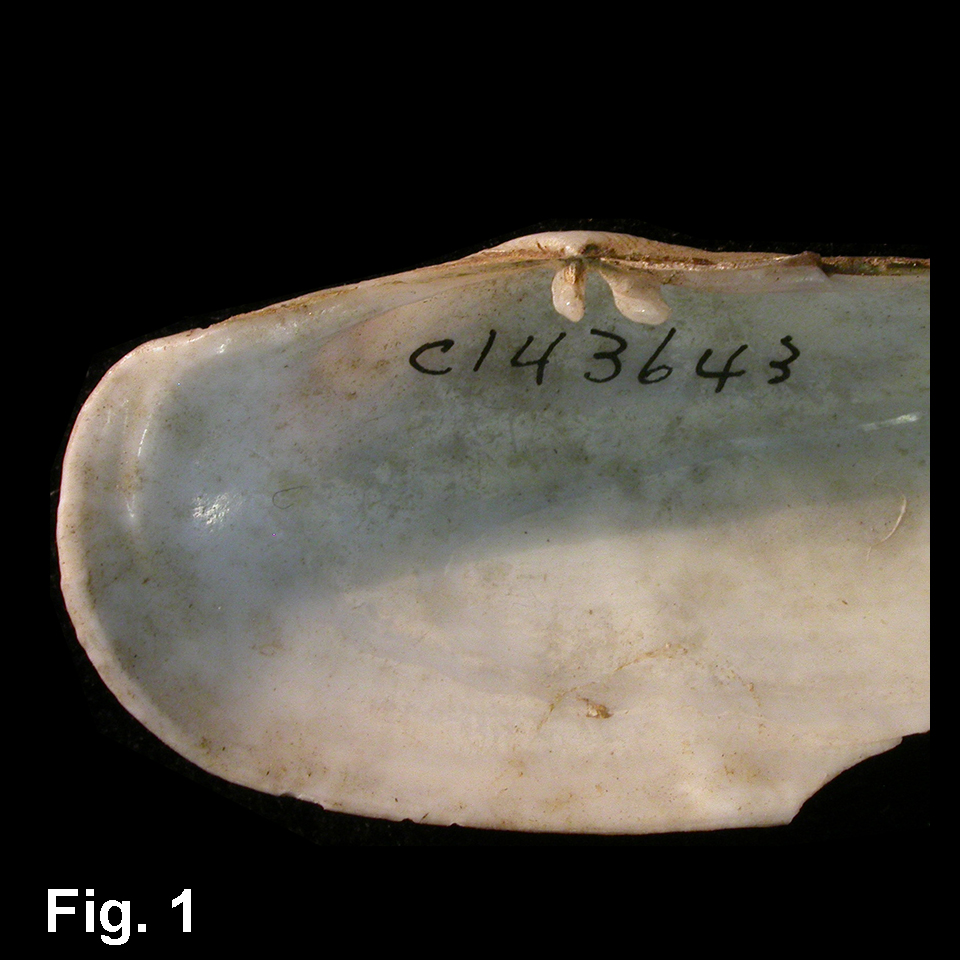
The Solecurtidae is a family of elongate bivalves similar in shape to the Solenidae. In terms of species, the family is small, with only about 40 species (Huber, 2010). In Australia seven species are recorded, only two of which are found in NSW. Solecurtids occur worldwide, in warmer seas. Some species are widely distributed in the Indo-West Pacific Ocean and reach into Queensland. The distribution of the NSW species is unclear. Solecurtus divaricatus appears to be a widespread Indo-Pacific species, but extends further south, reaching Twofold Bay, than is usual for tropical species. The other NSW species, which has been known incorrectly as Solecurtus australis is apparently endemic to eastern Australia. Solecurtids are marine or estuarine, mainly living in shallow water. They live in permanent vertical burrows in clean substrates, in some cases as deep as 500 mm below the surface. They have long siphons that extend to the surface, drawing in water laden with food through the inhalant siphon and expelling water through the exhalent siphon. Willan (1998) described the animal of Solecurtus sulcatus, as much too large to be accommodated by the shell, with its siphons several times the shell length. Family Reference The Australian species were treated by Lamprell & Whithead (1992). Huber (2010) covered the family worldwide and made some changes to the nomenclature. Coverage The two species known from NSW are detailed here. Identification notes Shell form Shells are elongate, similar to shells of Solenidae, gaping at both ends. Hinge and ligament In NSW species the hinge is strong, with two cardinal teeth in the right valve and one in the left; the cardinal teeth are shaped as long, curved prongs (often broken off) (Fig. 1). There are no lateral teeth. The ligament is external, attached to nymphs which project above the dorsal shell margin, behind the umbo. Shell interior The anterior and posterior muscle scars are usually well defined. The pallial sinus is very long, reaching forward for three-quarters of the shell length Fig. 1: Hinge teeth of Solecurtus divaricatus right valve (C.143643)
|