|
< Previous family introduction |
|
|||||
|
Family Tellinidae Tellins, Wafer Clams
|
||||||
|
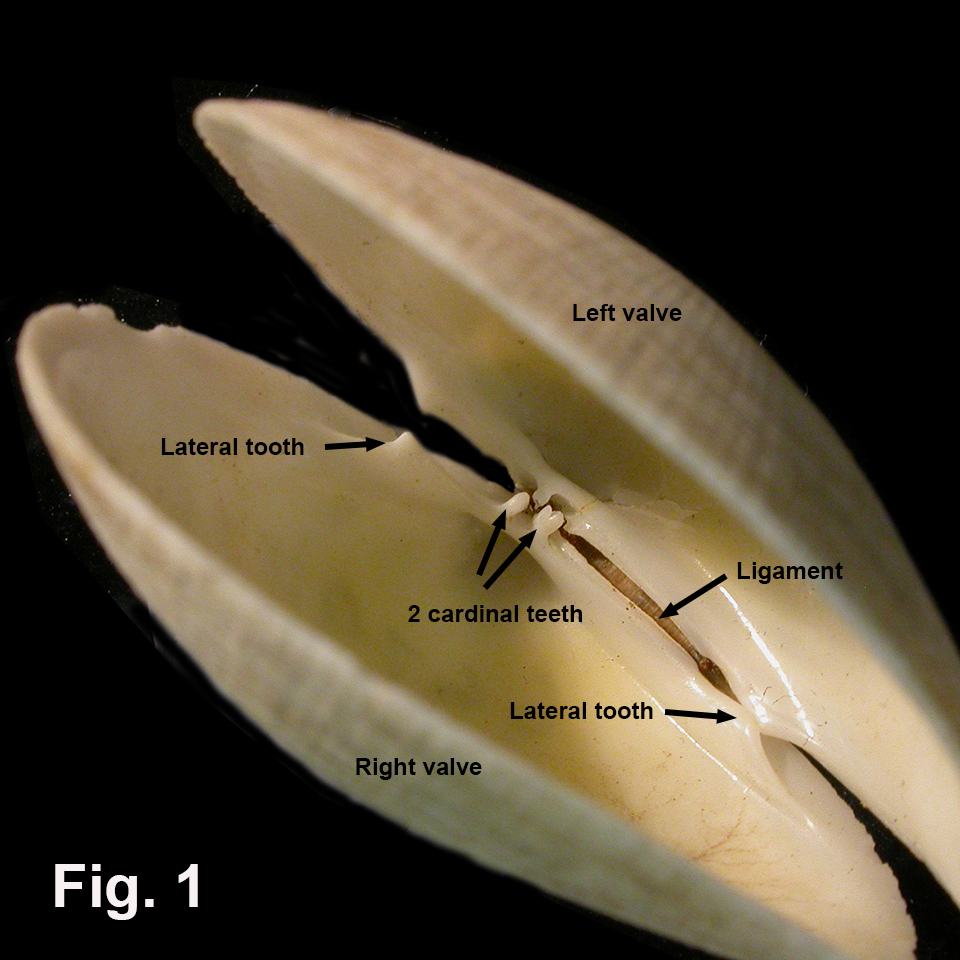
The Tellinidae is a very large family of bivalves encompassing about 500 species (Huber, 2015). As presently understood, the family is distributed worldwide, with half of the species occurring in the Indo-West Pacific. It is well represented in Australia, with numerous Indo-West Pacific species in the north and a small group of endemic species in southern Australia. NSW straddles these zones with representatives of both faunal groups. Tellinid shells are variable between species in size, shape, inflation and external sculpture. Moreover, the extent of intraspecific variation is increased by beach wear and fading in sunlight. Shells are laterally compressed to some degree; NSW species vary from very slim in Tellinota albinella to moderately inflated in Strigilla euronia. Shell shape is variable, from elongate to almost circular. The character which defines the family is the cruciform muscle at the base of the siphons, but its attachment scar is barely evident on the shell. The most obvious shell character is a distinct flexure in the shell posteriorly, well-illustrated in Macomona deltoidalis. This flexure is present in all species to some degree but varies from strong to barely noticeable. The interior of tellinid shells shows scars from attachment of anterior and posterior adductor muscles, and there is a large pallial sinus where the siphons are accommodated when retracted. The depth of the sinus varies between species, in some reaching as far forward as the anterior adductor muscle scar. The hinge has two cardinal teeth, one usually bifid, and usually two lateral teeth, but laterals are absent in the subfamily Macominae (Fig. 1) Tellinids bury deeply in sand or muddy sand, sometimes in coarse sand or shelly gravel. They are active burrowers and can usually rebury when disturbed. They have long, separate siphons that extend to the surface, the inhalant siphon drawing in water laden with suspended particles, and the exhalant siphon expelling water and waste. In NSW, some species are found living in open ocean surf beaches, but others are restricted to estuaries like Sydney Harbour, Port Hacking and Port Stephens. Family Reference The Australian species were described in 1992, but have been updated by more recent work: Lamprell, Kevin and Whitehead, Thora. 1992. Bivalves of Australia vol. 1. Crawford House Press, Bathurst. The family worldwide was catalogued most recently in 2015: Huber, M., Langleit, A. and Kreipl, K. 2015 Tellinoidea Blainville, 1814 pp. 167-297 in Huber, M. 2015. Compendium of Bivalves 2. Conchbooks, Harxheim, Germany. Coverage All NSW species are detailed here. The following three species are not included because their southern distributional limits do not extend into New South Wales. Jitlada philippinarum (Hanley, 1844). Lamprell & Whitehead (1992) list this (as Macomona australis (Deshayes, 1854)) as occurring in northern NSW, which is possible, but I have seen no substantiated records from NSW. The Australian Museum’s southernmost specimen is from Moreton Bay, Qld. Serratina capsoides (Lamarck, 1818). Lamprell & Whitehead (1992) list this (as Tellina capsoides Lamarck, 1818) as occurring in northern NSW, which is possible. The only record from NSW in the Australian museum is from a subsurface core sample of unknown age. Otherwise, the Australian Museum’s southernmost specimen is from Moreton Bay, Qld. Tellina (Obtellina) bougei G.B. Sowerby III, 1909. Lamprell & Whitehead (1992) note that this has been recorded from NSW, but I have been unable to trace the record and it is probably incorrect. Jactellina obliquaria (Deshayes, 1855). One freshly dead adult shell consisting of paired valves (Museum and Art Gallery of the Northern Territory P.51189) was collected subtidally from the Julian Rocks, east of Cape Byron in northernmost New South Wales, but that tropical Indo-Pacific species is probably only vagrant in New South Wales (R.C. Willan pers. comm.) so it is not detailed here. Identification Notes Shell Form Shell shape varies from elongate, compressed (as Pharaonella astula) to almost circular and well inflated (as Strigilla euronia). Hinge There are two cardinal teeth in each valve, one usually bifid, and two lateral teeth, except in Sylvanus lilium where the laterals are weak. Fig. 1 shows an interior view of the hinge of Pseudarcopagia botanica, which is typical of NSW species of the family. Shell Interior The anterior and posterior muscle scars, pallial line and pallial sinus are drawn in on the photographs for each species. The pallial sinus is large in all NSW species, sometimes reaching as far forward as the anterior muscle scar. Fig. 1: Twofold Bay, NSW, dredged in 15 m (C.66796)
|