|
< Previous family introduction |
|
|||||
 |
Family Solenidae Razor Shells or Fingernail Shells
|
|||||
|
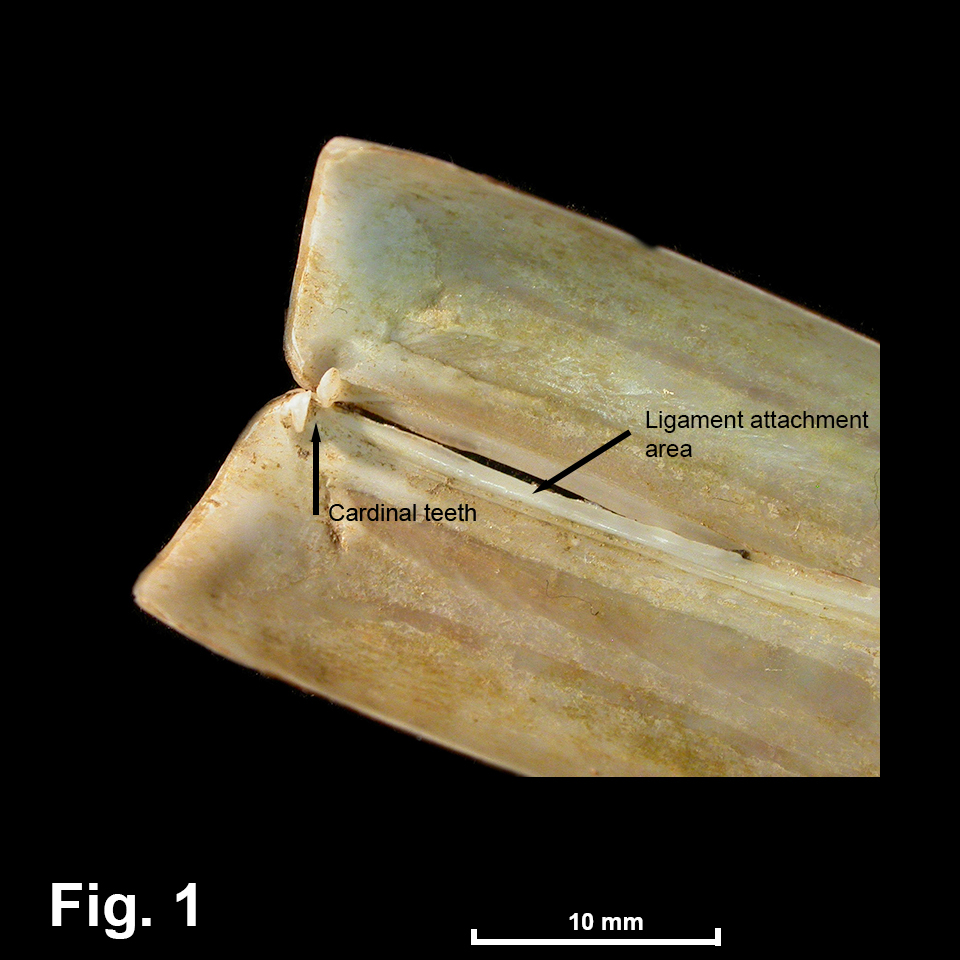
The Solenidae is a numerically small family of fairly fragile, very elongate shells which lives in soft substrates, especially seagrass beds. There are about 70 species in the family (Huber, 2010), mainly tropical and they are most common in the Indo-West Pacific region. There are about 10 species recorded from Australia, but only one from NSW. Solenids have an elongate shell form with equal shell valves that are neither flexed nor bent posteriorly. The body is compressed to fit into a long slender shell. The shell permanently gapes at both ends, with short stout siphons that are united for their entire length protruding from the posterior end; these siphons can be autotomised when an animal is under attack. An extendable foot protrudes from the anterior end. They live vertically or obliquely in the substrate in more or less permanent tubes, posterior end uppermost. They can move up and down within the tube rapidly by dilating the foot. Solenids, in common with most bivalves, are suspension feeders, filtering food particles from water they draw in via a short siphon that reaches upwards into clear water. Family Reference The Australian species were catalogued by Lamprell & Healy (1998). Coverage The only NSW species is covered here. Identification Notes Shell form Shells are long and narrow, gaping at both ends, with the ligament at the anterior end. Hinge The hinge (Fig. 1) consists of a single cardinal tooth in each valve, without any laterals. Shell interior The anterior adductor muscle scar is very long and narrow, with the posterior adductor muscle scar about half its length; both are close to the dorsal margin. The pallial line with its pallial sinus is clearly defined. Fig. 1 Interior of Solen vaginoides shell showing hinge teeth.
|