|
< Previous family introduction |
|
|||||
| Family picture here |
Family Crassatellidae Crassatellas
|
|||||
|
The Crassatellidae is a moderately sized family numerically, probably about 85 species, occurring worldwide in warm and temperate waters. Species vary from minute, around 3 mm, to large, over 100 mm in length. They live from the low intertidal down to bathyal depths, but most live in the shallow subtidal, burrowing in sand. In NSW, eight species are recorded, falling into two groups. Comprising the first group are two species of Eucrassatella which are large, heavy shells up to 88 mm in length with a thick brown periostracum. The second group has six species of much smaller shells; Talabrica aurora reaches up to 26 mm in length, but the other five species are all less than 10 mm in length. Family Reference The Australian species were catalogued by Lamprell and Whitehead in Bivalves of Australia volume 1 (1992) and by Lamprell and Healy in Bivalves of Australia volume 2 (1998). Huber (2010) catalogued the family worldwide in his Compendium of Bivalves. Coverage Al the NSW species are detailed here. Identification Notes Shells of Crassatellidae in NSW are characterised by:
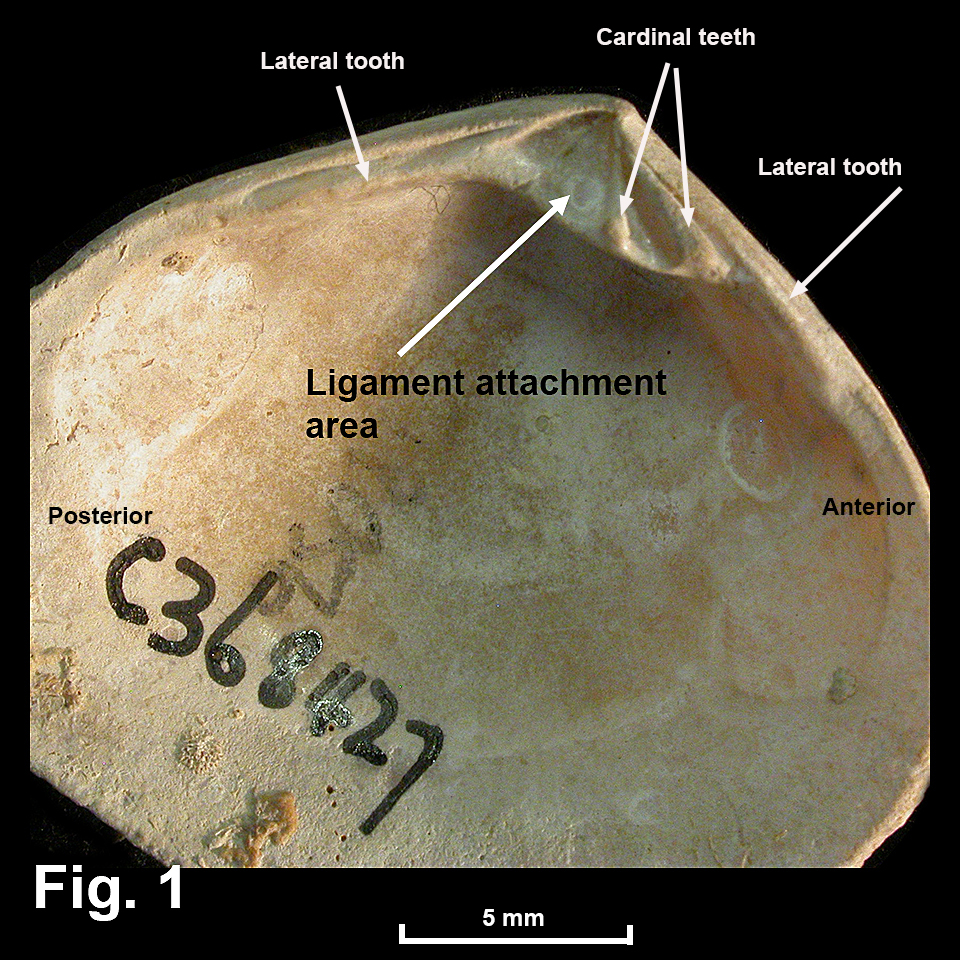
Fig. 1: Hinge structure of Talabrica aurora. Left valve (C.368427)
|